What Is Generative Engine Optimization?
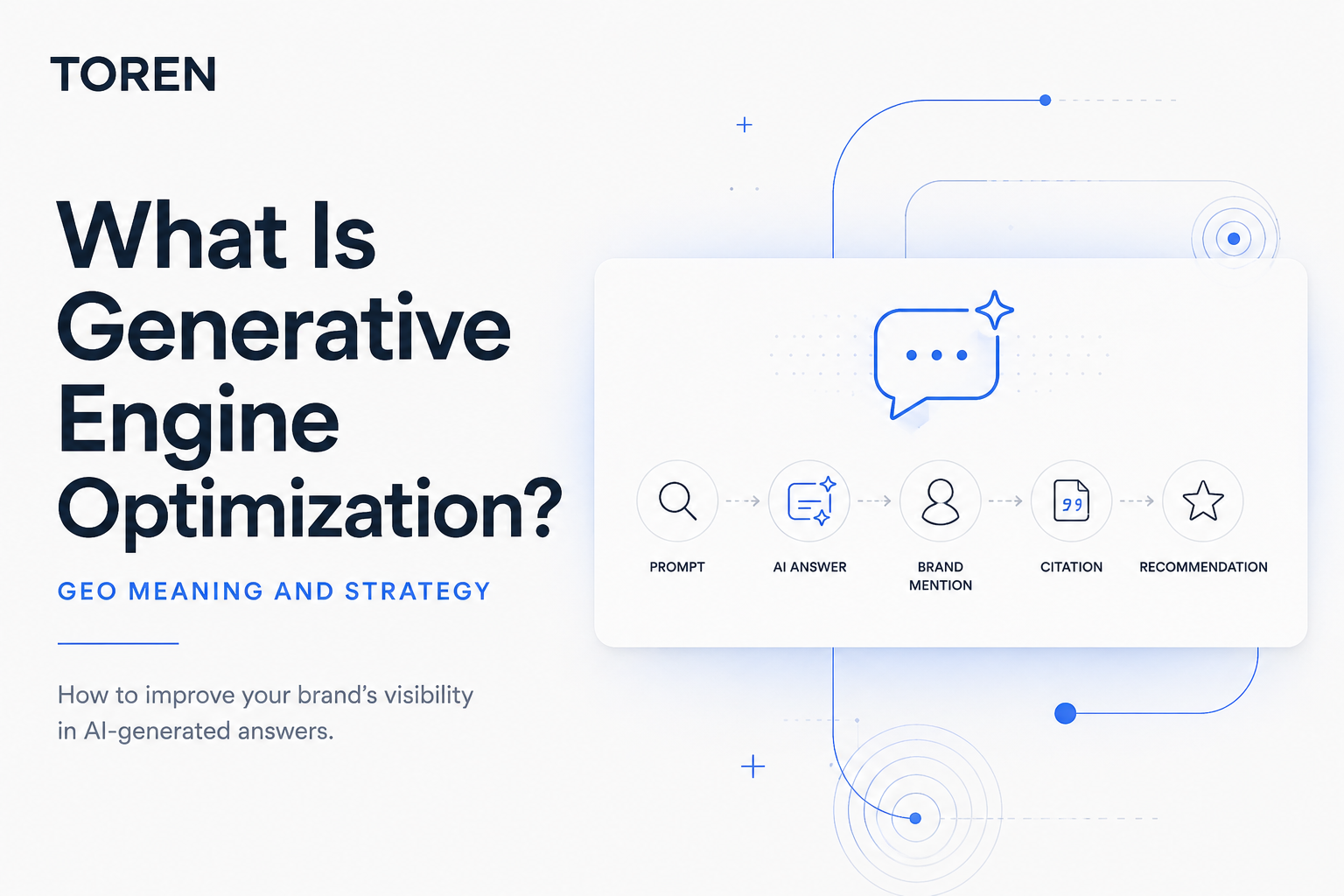
Generative Engine Optimization, often called GEO, is the practice of improving how brands, products, and content appear in AI-generated answers.
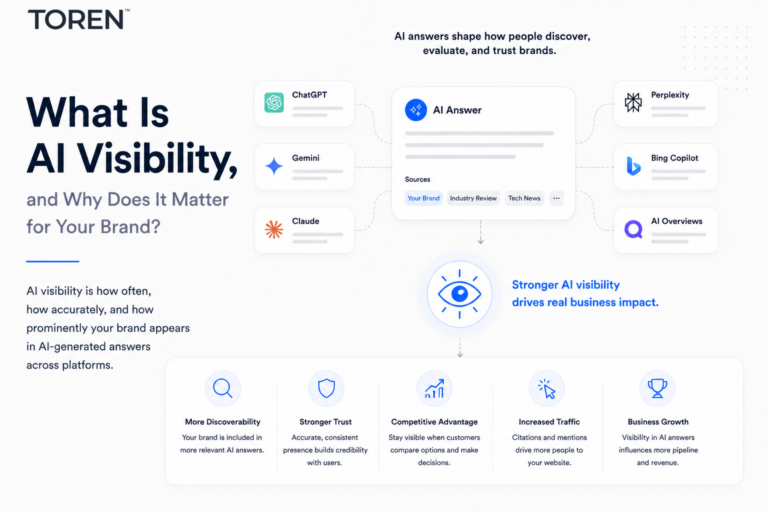
As people use tools like ChatGPT, Gemini, Claude, Perplexity, and AI-powered search experiences to research topics, compare options, and make decisions, brands are no longer optimizing only for traditional search results. They are also optimizing for how AI systems understand them, describe them, cite them, and recommend them.
Traditional SEO focuses on improving visibility in search engine results pages. GEO focuses on improving visibility inside generated answers.
That distinction matters.
A person may not click through ten blue links to compare vendors. They may ask an AI system for a short list of recommended options. They may ask for the best solution for a specific use case. They may ask how one company compares to another. They may ask which sources support a claim.
In those moments, the AI-generated answer becomes part of the discovery journey.
Generative Engine Optimization helps brands understand and improve their presence in that new environment.

Why Generative Engine Optimization Matters
AI-generated answers are changing how people find information.
Instead of searching only with short keyword phrases, users increasingly ask full questions:
- “What are the best tools for monitoring AI visibility?”
- “Which companies help brands improve local search performance?”
- “What are the top alternatives to this platform?”
- “Which vendor is best for a mid-sized business?”
- “What should I look for before choosing a provider?”
- “Which brands are most trusted in this category?”
These prompts are different from traditional search queries. They are often more specific, more conversational, and closer to decision-making.
When an AI system answers, it may summarize the category, mention several brands, cite sources, compare options, and recommend a path forward. That answer can shape perception before the user visits a website.
For brands, this creates a new strategic question:
Are AI systems understanding and recommending our brand when people ask relevant questions?
That is where GEO becomes important.
GEO Is Related to SEO, But It Is Not the Same
Generative Engine Optimization and SEO overlap, but they are not identical.
SEO is still important. Search engines remain a major discovery channel, and many AI systems rely on web content, structured information, trusted sources, and search-like retrieval patterns. Strong SEO fundamentals can support GEO.
But GEO requires a broader way of thinking.
SEO often asks:
Can this page rank for a target query?
GEO asks:
Can an AI system understand, trust, and use this information when generating an answer?
That means GEO is not only about keywords. It is also about entities, context, citations, authority signals, content clarity, and answer usefulness.
A brand can rank well in traditional search and still be missing from AI-generated recommendations. A page can receive organic traffic but still fail to clearly explain the brand’s category, products, use cases, competitors, and proof points in ways AI systems can interpret.
This is why GEO should not be treated as “SEO with AI buzzwords.” It is a related but distinct discipline.
Learn more about AI Visibility →
How Generative Engine Optimization Works
GEO starts with a simple idea: AI systems generate answers based on the information they can access, interpret, and synthesize.
That information may come from many sources, including:
- brand websites
- product pages
- comparison pages
- documentation
- review platforms
- directories
- news articles
- third-party mentions
- customer stories
- social or community discussions
- structured data
- citations surfaced in AI answer engines
Different AI systems work in different ways, and no brand can fully control how a model generates an answer. But brands can improve the quality, clarity, and consistency of the information ecosystem around them.
The easier a brand is to understand, categorize, verify, and compare, the more likely it is to be accurately represented in AI-generated answers.
What GEO Optimizes For
Generative Engine Optimization is not one tactic. It is a blend of content strategy, brand positioning, technical structure, and ongoing monitoring.
The main goal is to improve how a brand appears when AI systems answer relevant prompts.
Brand understanding
AI systems need to understand what a brand is, what it does, who it serves, and which category it belongs to.
If a brand’s positioning is vague, inconsistent, or overly generic, AI systems may struggle to place it in the right context.
For example, “we help businesses grow with innovative solutions” does not give an AI system much to work with. A clearer statement would explain the category, audience, use case, and outcome.
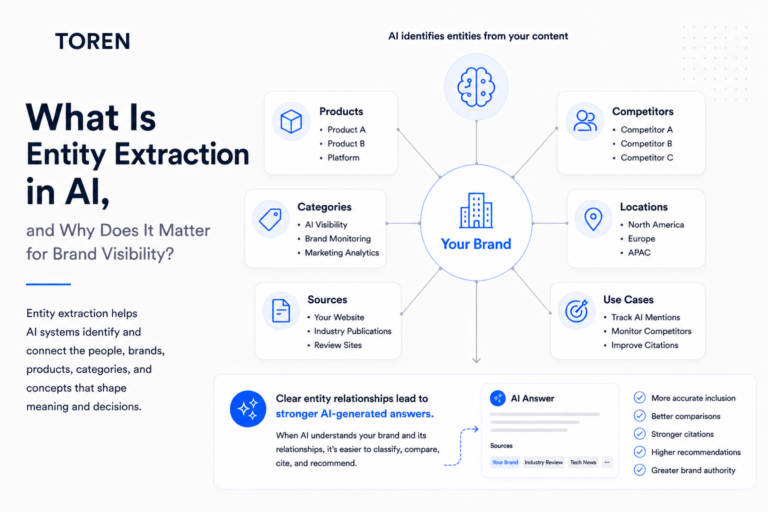
Entity clarity
A brand is an entity. So are its products, competitors, founders, locations, industries, and customer segments.
Entity clarity helps AI systems distinguish one company from another and understand how different concepts relate.
This is especially important when a brand name is similar to another company, overlaps with a common word, or operates in a crowded category.
Learn more about Entity Extraction →
Source inclusion
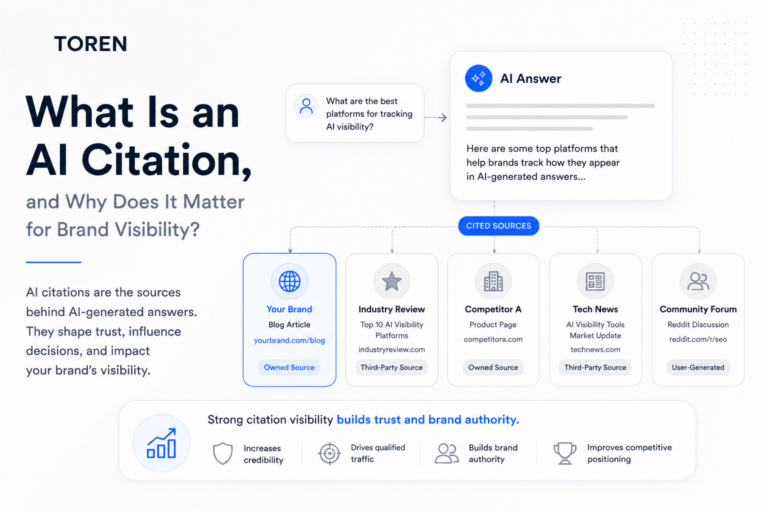
AI systems often rely on source material to support generated answers. In some AI search experiences, those sources are visible as citations. In others, they may influence the answer without being shown directly.
GEO aims to improve the quality and relevance of the sources that describe a brand.
That includes brand-owned pages and credible third-party sources.
Citation visibility
When AI systems cite sources, those citations can influence trust and traffic. They also reveal which sources are shaping the answer.
If competitors are being cited more often than your brand, that may indicate a content or authority gap.
Learn about AI citations →
Recommendation presence
In many business contexts, the most valuable AI answers are not just informational. They are evaluative.
They recommend tools, vendors, agencies, products, services, or next steps.
GEO helps brands understand whether they are being included in those recommendation moments and what context surrounds that inclusion.
Answer accuracy
Being mentioned is not enough if the answer is wrong.
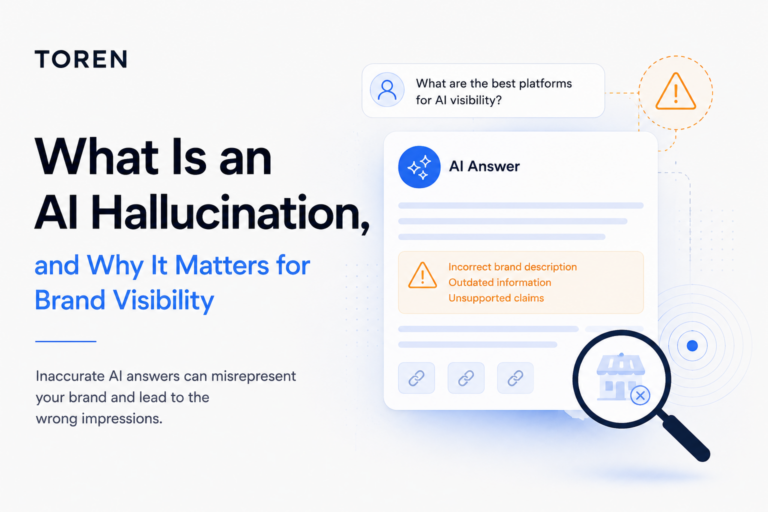
A brand may appear in an AI-generated answer but be described inaccurately, associated with outdated services, placed in the wrong category, or compared to the wrong competitors.
GEO includes improving the underlying content and signals that help AI systems describe the brand correctly.
Competitive context
AI-generated answers often include multiple brands in the same category. That makes GEO inherently competitive.
It is not only about whether your brand appears. It is also about who appears with you, who appears instead of you, and how each brand is positioned.
Common GEO Tactics
The best GEO work usually starts with content and clarity, not tricks.
There is no reliable shortcut that guarantees inclusion in AI answers. But there are practical steps that can improve how well a brand is understood.
Build clear category pages
A category page helps explain where a brand fits in the market.
For example, a company should clearly explain whether it is a project management tool, an AI visibility platform, a local SEO agency, a healthcare analytics provider, a dealership marketing partner, or something else.
Category pages help connect the brand to the types of prompts customers are likely to ask.
Create use-case content
AI systems often respond to use-case-driven prompts.
Examples:
- “best platform for tracking AI brand mentions”
- “software for small construction companies”
- “marketing agency for car dealerships”
- “tools for monitoring competitor visibility”
- “solutions for enterprise content governance”
Use-case pages help clarify where a brand is relevant and who it is built for.
Answer buyer questions directly
GEO-friendly content should answer the questions people actually ask during discovery and evaluation.
That includes:
- What is this?
- How does it work?
- Who is it for?
- What are the alternatives?
- How does it compare?
- What does it cost?
- What should buyers consider?
- What are the risks?
- What makes one provider different from another?
This does not mean publishing low-quality articles for every possible query. It means creating useful, structured content that reflects real buyer decision-making.
Improve comparison and alternative pages
AI-generated answers frequently compare options.
If a brand does not provide clear comparison content, AI systems may rely on competitors, directories, reviews, or third-party summaries to understand the competitive landscape.
Good comparison content should be fair, specific, and useful. It should explain differences in audience, use case, capabilities, pricing model, strengths, and tradeoffs.
Strengthen proof points
AI systems are more likely to represent claims accurately when those claims are supported by evidence.
Useful proof points include:
- case studies
- customer examples
- testimonials
- reviews
- integrations
- awards
- certifications
- media mentions
- original research
- benchmark data
- expert commentary
The goal is not to stuff pages with credibility markers. The goal is to make claims easier to verify.
Use structured data
Schema markup can help define key information about a page, organization, article, product, FAQ, or breadcrumb structure.
Schema does not guarantee AI inclusion, but it can support clarity. It gives machines a more structured way to interpret what a page is about.
For educational content, article schema, FAQ schema, breadcrumb schema, and defined-term schema can be especially useful.
Keep content current
AI systems can surface outdated or incomplete information if the public information ecosystem around a brand is stale.
Brands should regularly update key pages when positioning, products, pricing, markets, service areas, or competitors change.
Freshness alone is not the goal. Accuracy is.
GEO Example
Imagine a company that provides AI market intelligence and optimization software for brands.
A potential customer asks:
“What are the best platforms for tracking how my brand appears in AI answers?”
A generative AI system may produce a list of tools, explain what each one does, cite sources, and recommend which option fits different types of teams.
From a GEO perspective, the company would want to know:
- Is the brand included?
- Is it described accurately?
- Is it categorized correctly?
- Are competitors listed instead?
- What sources are cited?
- What use cases are mentioned?
- Does the answer recommend the brand or only mention it?
- Does the answer change across AI platforms?
- What content gaps may be influencing the answer?
The company may discover that competitors appear because they have clearer category pages, stronger comparison content, more third-party mentions, or better structured educational resources.
That insight can guide the next content and positioning decisions.
What GEO Is Not
Because the category is new, GEO can easily be misunderstood.
GEO is not keyword stuffing for AI
Adding repeated terms to a page is not a durable strategy. AI systems are designed to synthesize meaning, not simply count keywords.
Clarity matters more than repetition.
GEO is not tricking language models
Brands should not think of GEO as a way to manipulate AI systems. The stronger approach is to create accurate, useful, well-structured information that AI systems can understand and users can trust.
GEO is not replacing SEO
SEO still matters. Strong technical health, useful content, site architecture, and authority signals can all support AI visibility.
GEO expands the strategy. It does not erase the old one.
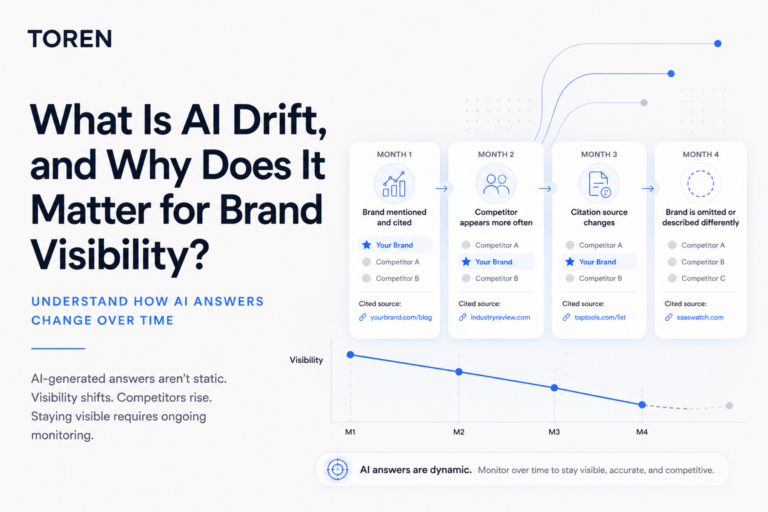
GEO is not a one-time project
AI-generated answers change. Competitors publish new content. Citations shift. Models update. Search experiences evolve.
GEO requires ongoing monitoring and iteration.
Learn more about AI drift →
Why GEO Requires Better Content Strategy
One of the biggest mistakes brands can make is treating GEO as a volume game.
Publishing a large number of shallow articles is unlikely to create durable visibility. In many cases, it may make a site less useful.
A better approach is to build a structured content system.
That means creating the right blend of pages:
- definition pages
- category pages
- use-case pages
- comparison pages
- FAQ pages
- product pages
- proof pages
- customer stories
- thought leadership
- technical or methodology pages
Each page should have a clear purpose. Together, they should help humans and AI systems understand what the brand does, where it fits, and why it is credible.
This is where GEO becomes more strategic than tactical.
Traditional SEO often rewarded breadth. GEO increasingly rewards clarity, authority, specificity, and structured relevance.
The goal is not to publish more content for the sake of more content.
The goal is to build an information architecture that makes the brand easier to understand and easier to recommend.
How Brands Can Start With GEO
A practical GEO strategy usually starts with five steps.
1. Identify the prompts that matter
Start with the questions customers are likely to ask AI systems.
These may include category prompts, comparison prompts, alternative prompts, problem-aware prompts, local prompts, product prompts, and decision-stage prompts.
2. Monitor current AI visibility
Before creating new content, understand the baseline.
Which prompts include your brand? Which prompts include competitors? Which answers cite your website? Which answers misrepresent your positioning?
3. Map content gaps
Look for missing or weak content that may affect AI answers.
Common gaps include unclear category positioning, missing use-case pages, weak comparison content, thin FAQs, outdated product pages, and limited third-party validation.
4. Improve content structure
Make important information easier to find and interpret.
Use clear headings, direct answers, consistent terminology, internal links, schema markup, and concise explanations of products, audiences, use cases, and differentiators.
5. Re-measure over time
GEO is iterative. Monitor how AI-generated answers change after content updates, competitor changes, source shifts, and model updates.
GEO and the Future of Search
Search is becoming more conversational, more summarized, and more answer-driven.
This does not mean traditional websites disappear. It means websites have a new job.
A website is no longer only a destination for users who click from search results. It is also a source of structured, authoritative information that AI systems may use to understand and explain a brand.
For modern teams, this changes the role of content.
Content needs to serve humans, search engines, and generative AI systems at the same time.
The strongest brands will not simply chase rankings. They will build clear, credible information ecosystems that help AI systems understand who they are, what they do, and when they should be included in answers.
That is the purpose of Generative Engine Optimization.
Related Reading
Back to AI Fundamentals
FAQ
What does Generative Engine Optimization mean?
Generative Engine Optimization is the practice of improving how brands, products, and content appear in AI-generated answers. It focuses on brand mentions, citations, recommendations, answer accuracy, and how well AI systems understand a company’s relevance.
Is GEO the same as SEO?
No. GEO and SEO are related, but they are not the same. SEO focuses on traditional search rankings and organic traffic. GEO focuses on how brands appear inside AI-generated answers from tools like ChatGPT, Gemini, Claude, Perplexity, and AI-powered search experiences.
Why does GEO matter?
GEO matters because people increasingly use AI systems to research companies, compare vendors, and make decisions. If a brand is missing, misrepresented, or replaced by competitors in AI-generated answers, it can affect awareness, trust, and demand.
How can a brand improve GEO?
A brand can improve GEO by creating clear category and use-case content, answering buyer questions directly, strengthening comparison pages, improving entity clarity, supporting claims with credible proof points, using structured data, and monitoring AI-generated answers over time.
Does GEO replace SEO?
No. GEO does not replace SEO. Strong SEO fundamentals can support AI visibility, but GEO expands the strategy to include AI-generated answers, citations, brand mentions, recommendations, and answer accuracy.
Understand how AI sees your brand—and what to do next.
Toren measures how AI systems understand, cite, recommend, and position your brand, then identifies the opportunities to improve the information and digital assets shaping those outcomes.