What Is an AI Citation, and Why Does It Matter for Brand Visibility?
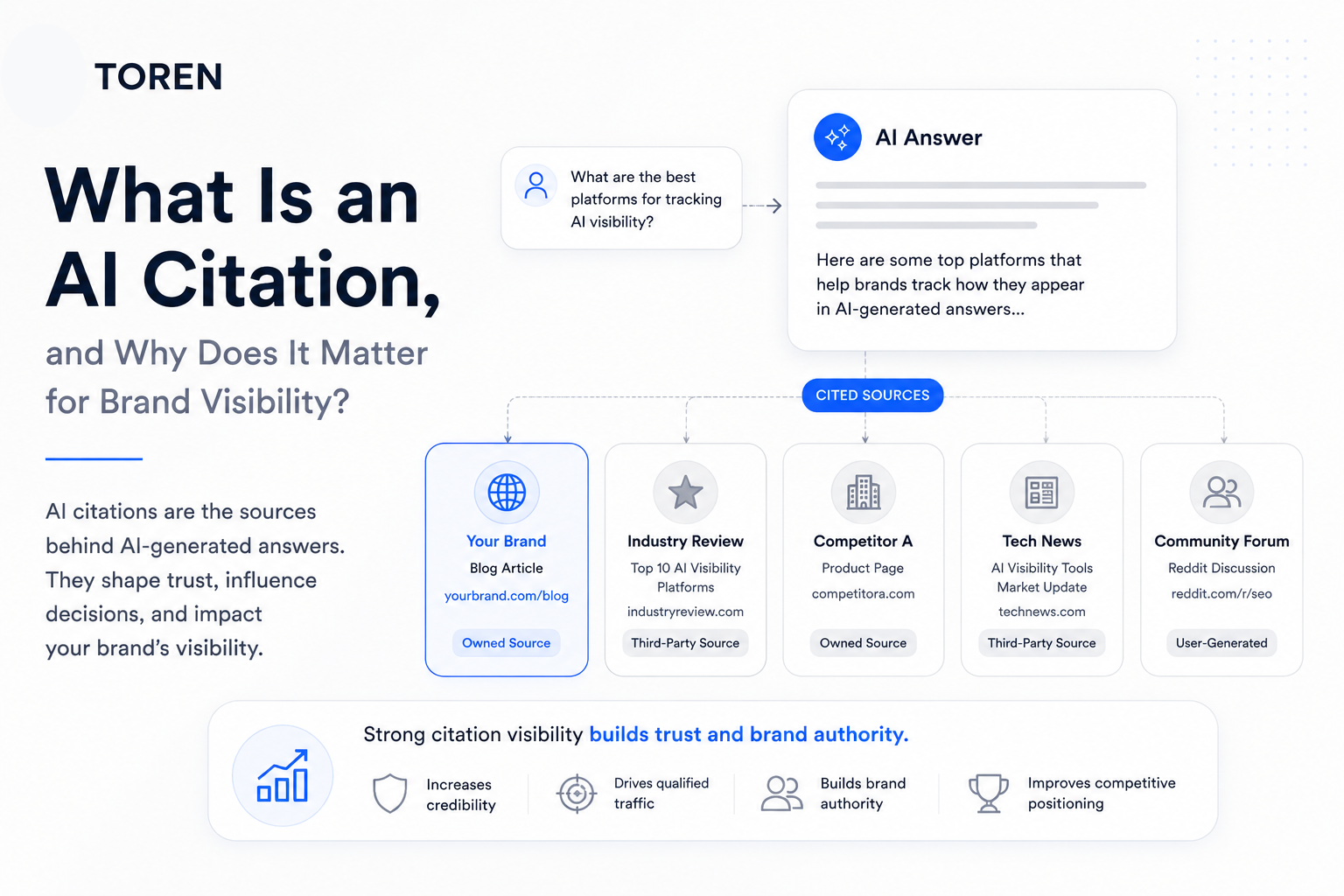
An AI citation is a source that an AI system references or displays to support part of a generated answer.
In AI-powered search experiences, citations often appear as links, source cards, footnotes, or references attached to an answer. They help users understand where information may have come from and which sources influenced the response.
For brands, AI citations matter because they can shape trust, visibility, traffic, and authority.
A brand may be mentioned in an AI-generated answer, but if the citation points to a competitor, a third-party directory, an outdated article, or a weak source, the brand may not control the context around that mention.
In other cases, a brand may not be mentioned directly, but its content may be cited as a source that supports the answer. That can still create value.
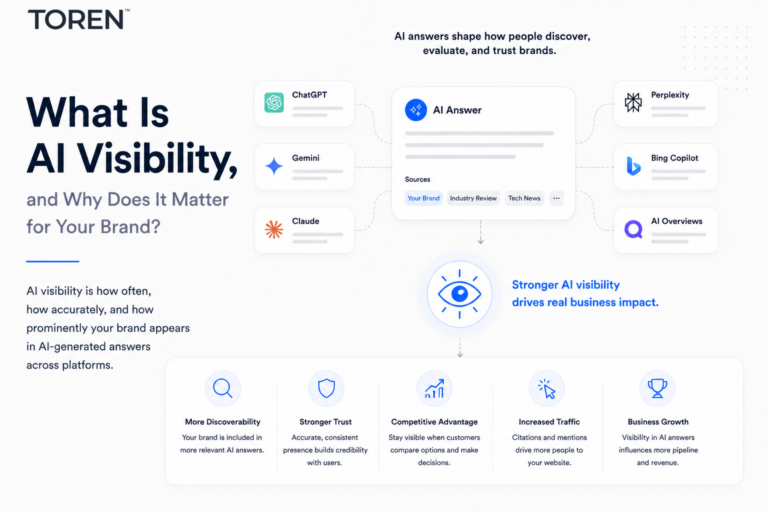
As tools like ChatGPT, Gemini, Claude, Perplexity, and AI-powered search experiences become part of the discovery journey, citations are becoming an important part of AI visibility.
They help answer a critical question:
Which sources are shaping what AI systems say about your brand, your competitors, and your category?

Why AI Citations Matter
AI-generated answers can influence decisions before a user visits a website.
When citations are shown, they can influence which sources users trust, which brands they explore, and which pages receive attention.
For example, a user may ask:
- “What are the best tools for monitoring AI visibility?”
- “Which platforms help brands track AI-generated answers?”
- “What are the top alternatives to this provider?”
- “How should I choose a local marketing agency?”
- “Which companies are leaders in this category?”
If an AI system answers and cites sources, those citations can become part of the user’s decision path.
A citation may point to:
- a brand’s own website
- a competitor’s website
- a third-party review site
- a directory
- a news article
- a blog post
- a documentation page
- a comparison page
- a research report
- a customer story
That means citations are not just technical references. They are visibility signals.
They show which sources the AI experience presents in support of the answer.
Learn more about AI visibility →
AI Citations Are Not the Same as Traditional Backlinks
AI citations and backlinks are related conceptually, but they are not the same.
A backlink is a link from one webpage to another. In traditional SEO, backlinks can help signal authority, relevance, and trust.
An AI citation is different. It appears inside or alongside an AI-generated answer as a source reference.
The citation may support a specific claim, provide context for the answer, or give the user a place to verify information.
In traditional SEO, a brand may ask:
Who links to us?
In AI visibility, a brand should also ask:
Which sources are AI systems citing when answering questions about our category?
That distinction matters.
A brand may have backlinks but few AI citations. Or a brand may be cited in AI-generated answers even if the answer does not rank like a traditional search result.
AI citations are part of a different visibility environment.
What AI Citations Can Reveal
AI citations can help brands understand how AI systems are sourcing information.
They can reveal which pages, sources, and narratives that are being associated with or used to support generated answers..
Source influence
If an AI answer cites a specific page, that page may be influencing how the answer is framed.
For example, if a comparison prompt cites a competitor’s article, that competitor may be shaping the narrative around the category.
Content gaps
If your competitors are cited and your brand is not, that may point to a content gap.
The issue may not be that your brand is irrelevant. It may be that competitors have clearer category pages, stronger comparison content, better FAQs, or more useful educational resources.
Authority gaps
If AI systems consistently cite third-party sources instead of your own website, your owned content may not be viewed as the strongest available source for that topic.
That does not always mean the third-party citation is bad. But it does mean the brand should understand why that source is being used.
Accuracy risks
A citation can reveal whether an answer is supported by a reliable source, an outdated source, or a source that only partially supports the claim.
This matters because citations can appear trustworthy even when the cited source does not fully support the generated answer.
Competitive positioning
Citations can show which competitors are being supported by source material and which competitors are being recommended without strong evidence.
For brands, this can become useful competitive intelligence.
Common Types of AI Citations
AI citations can appear in several forms depending on the platform.
Brand-owned citations
These are citations that point to your own website or owned assets.
Examples include:
- homepage
- product pages
- service pages
- blog articles
- Learning Center pages
- FAQ pages
- comparison pages
- case studies
- documentation
- research or methodology pages
Brand-owned citations are valuable because they can reinforce your own positioning and drive users to your source material.
Third-party citations
These are citations from external sources that mention or describe your brand, category, or competitors.
Examples include:
- review platforms
- software directories
- industry publications
- news articles
- partner pages
- analyst reports
- list articles
- local directories
- customer review sites
Third-party citations can be valuable because they may carry independent credibility. They can also be risky if the information is outdated, incomplete, or inaccurate.
Competitor citations
Sometimes an AI answer about a category or comparison will cite a competitor’s website.
This can influence how the category is framed.
If a competitor owns the source that explains the market, their positioning may shape the AI-generated answer.
Neutral or informational citations
An answer may cite educational or informational sources that do not belong to any vendor.
These sources can shape how a concept, category, or buyer problem is defined.
For example, a general article about AI search may influence how an answer describes generative engine optimization or AI visibility.
Weak or mismatched citations
Not every citation is useful.
Some citations may be outdated, thin, loosely related, or only partially connected to the claim being made.
A citation can create the appearance of support even when the underlying source is weak.
This is one reason brands should evaluate citation quality, not just citation presence.
Example: How AI Citations Affect Brand Visibility
Imagine a company that provides AI visibility monitoring for marketing teams.
A potential buyer asks:
“What are the best platforms for tracking how my brand appears in AI-generated answers?”
The AI-generated answer includes several companies. Next to each recommendation, the answer displays citations.
One competitor is supported by a third-party software directory. Another is supported by a comparison article. A third is supported by its own product page.
Your brand is mentioned, but the citation points to an old blog post that describes the company as a general SEO analytics tool rather than an AI visibility platform.
From a brand visibility perspective, several questions matter:
- Was the brand mentioned?
- Was the brand recommended?
- Which source was cited?
- Did the citation support the correct positioning?
- Was the source current?
- Were competitors cited more clearly?
- Did the answer rely on third-party sources, owned content, or competitor content?
- Did the citation help or weaken trust?
In this case, the brand is visible, but the citation may be shaping the wrong understanding.
That is why citation visibility matters.
AI Citations and Trust
Citations help users feel that an AI-generated answer is grounded in sources.
That trust can be useful. It can also be complicated.
Users may assume that a cited answer is accurate, but citations do not automatically guarantee correctness. A citation may support only part of the answer. It may point to an outdated page. It may reference a weak source. Or it may be attached to a claim that the source does not fully prove.
For brands, this creates two responsibilities.
First, brands should make their own content clear, current, and useful enough to be cited.
Second, brands should monitor whether AI systems are citing sources that accurately represent them.
A citation can support brand trust, but only when the underlying source is strong.
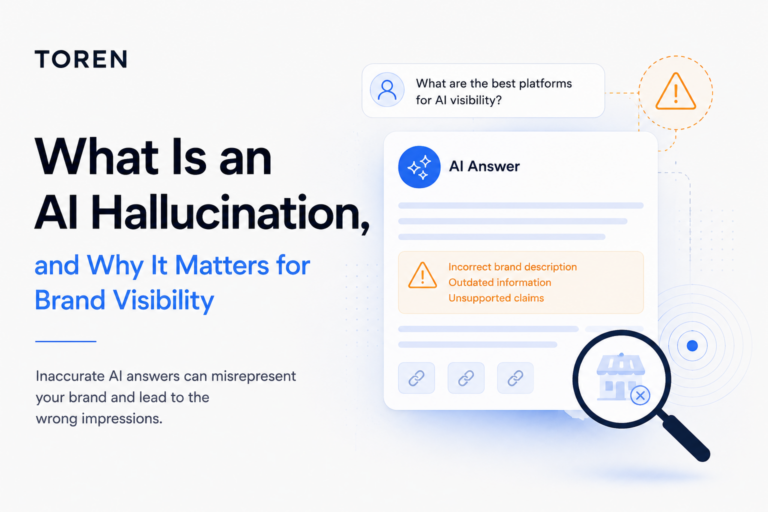
AI Citations and Hallucinations
AI citations are closely related to AI hallucinations.
A hallucination is an inaccurate, unsupported, or misleading AI-generated answer. Citations can reduce hallucination risk when they point to relevant, reliable sources.
But citations do not eliminate the risk.
An AI answer can still:
- cite a source that does not fully support the claim
- mix accurate source material with unsupported assumptions
- cite an outdated page
- cite the wrong brand or product
- summarize the source incorrectly
- attach a citation to the wrong part of the answer
That means citations should be reviewed as part of AI visibility monitoring.
Internal link:
Learn more about AI hallucinations →
How Brands Can Improve AI Citation Visibility
Brands cannot force AI systems to cite a specific source. But they can improve the likelihood that their content is useful, relevant, and clear enough to be considered.
Create direct, source-worthy pages
Pages should answer important questions clearly.
A source-worthy page is not vague marketing copy. It explains a concept, product, category, comparison, methodology, or use case in a way that is useful to both humans and machines.
Strengthen category content
If you want to be cited in answers about your category, your site needs to explain the category clearly.
For example, a brand in AI visibility should have strong pages explaining AI visibility, generative engine optimization, AI citations, AI drift, and related concepts.
Build useful comparison content
AI systems often answer comparison and alternative prompts.
If your content does not explain how your brand compares to other options, AI systems may rely on third-party lists, directories, or competitor pages.
Use clear headings and structured sections
AI systems and search engines benefit from content that is easy to parse.
Use headings that match real questions. Answer directly. Organize pages around definitions, examples, common questions, and practical next steps.
Add FAQ sections
FAQ sections can help clarify buyer questions and support structured data.
They are especially useful for educational pages, product pages, comparison pages, and service pages.
Keep information current
Outdated pages can create citation problems.
If a page is old but still indexed and referenced, it may continue shaping AI-generated answers in ways that no longer match the brand.
Support claims with evidence
AI citations are stronger when the underlying content includes proof.
Useful proof points include:
- customer examples
- case studies
- original research
- data points
- methodology explanations
- integrations
- reviews
- third-party validation
- expert commentary
Use schema markup
Schema can help define what a page is about and how it connects to the broader site.
For this type of Learning Center article, Article schema, FAQPage schema, BreadcrumbList schema, and DefinedTerm schema can help reinforce the page’s purpose.
Schema is not a guarantee of citation visibility, but it supports clarity.
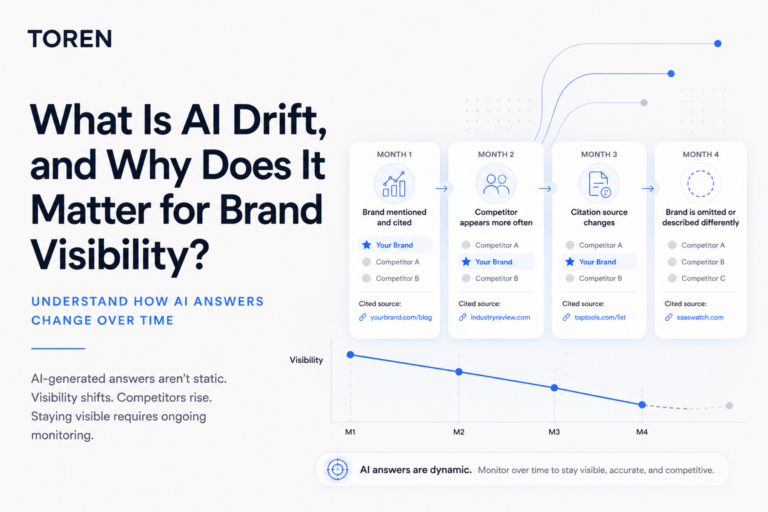
Citation Drift: Why Citations Change Over Time
AI citations are not fixed.
A page may be cited one month and replaced the next. A competitor may gain citations after publishing stronger content. A third-party directory may become more prominent. A source may disappear from an answer after a model or retrieval update.
This is called citation drift.
Citation drift matters because it shows that AI visibility is dynamic.
A brand should monitor not only whether it is mentioned, but also which sources are supporting the answer over time.
Learn more about AI drift →
What To Monitor in AI Citations
When reviewing AI citations, brands should look beyond whether a link appears.
Important questions include:
- Is our website cited?
- Are competitors cited?
- Are third-party sources cited?
- Which page is being cited?
- Is the cited page current?
- Does the citation support the claim?
- Does the citation reinforce the right positioning?
- Does the citation send users to a useful page?
- Are citations changing over time?
- Do different AI platforms cite different sources?
The goal is to understand the source layer behind AI-generated answers.
AI Citations and Content Strategy
AI citations are a strong signal for content strategy.
If AI systems cite competitors, third-party directories, or outdated sources more often than your own content, that can reveal where your content ecosystem is weak.
A strong citation strategy is not about trying to force links. It is about building better source material.
That means creating content that is:
- clear
- specific
- accurate
- current
- useful
- well-structured
- internally connected
- supported by evidence
- aligned with real buyer questions
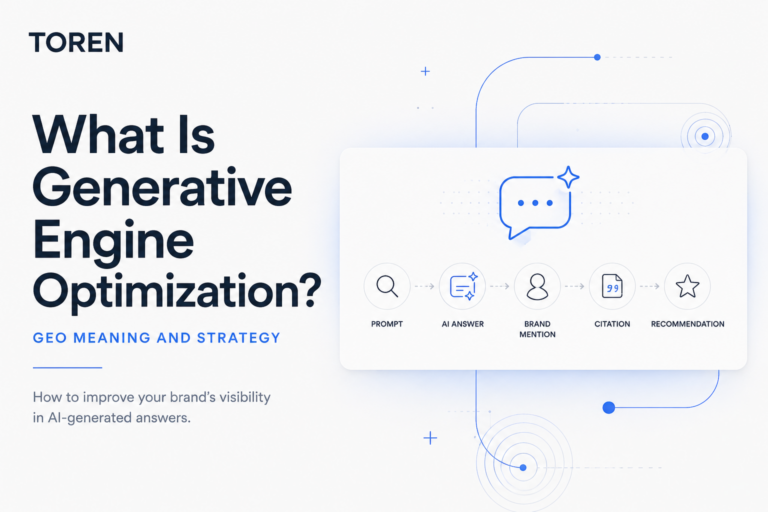
This is where AI citations connect directly to generative engine optimization.
Learn more about Generative Engine Optimization →
Final Takeaway
An AI citation is a source that an AI system references or displays to support a generated answer.
For brands, citations matter because they influence trust, visibility, traffic, and the sources shaping customer perception.
A citation can strengthen a brand’s authority when it points to accurate, useful, and current content. It can also create risk when it points to outdated, weak, competitor-owned, or misleading sources.
As AI-generated answers become more common in discovery and decision-making, brands need to understand not only whether they appear, but which sources are being used to explain them.
AI visibility is not just about mentions.
It is also about citations.
Related Reading
- What is AI Visibility?
- What is Generative Engine Optimization?
- What is an AI Hallucination?
- What is AI Drift?
Back to AI Fundamentals
See which sources shape your AI visibility
Toren helps brands monitor AI-generated answers, identify which sources are being cited, understand where competitors are being recommended, and find content opportunities that can improve brand inclusion.